 Naasongstelugu.info World News, Live News, Trending News, Latest News, Popular News Website in India, Telugu News, Health News, Business News, Sports News, Entertainment News
For utility operators and project developers, the difference between a functional energy storage asset and an optimized one often lies in the sophistication of its control architecture. When deploying a grid scale battery energy storage system, the Supervisory Control and Data Acquisition (SCADA) layer serves as the central nervous system, translating high-level grid commands into precise battery actions. Without seamless integration between the physical hardware and the digital control logic, even the most powerful infrastructure cannot deliver the reliability required for modern grid support. HyperStrong approaches this integration with a systems-level engineering mindset, ensuring that their solutions communicate effectively with existing grid management platforms from the outset.
The Role of SCADA in Modern Grid Stability
A grid scale battery energy storage system must respond to fluctuations in frequency and voltage within milliseconds to maintain stability. The SCADA system is responsible for monitoring thousands of data points in real time, from cell-level temperatures to inverter statuses, while executing automatic generation control signals from the transmission system operator. HyperStrong engineers its energy storage platforms to be fully compatible with standard industrial communication protocols, such as IEC 61850 and Modbus TCP/IP. This compatibility reduces the engineering overhead associated with retrofitting control systems, allowing for faster project commissioning and more predictable operational performance across diverse grid environments.
Hardware Integration and the hyperblock m Architecture
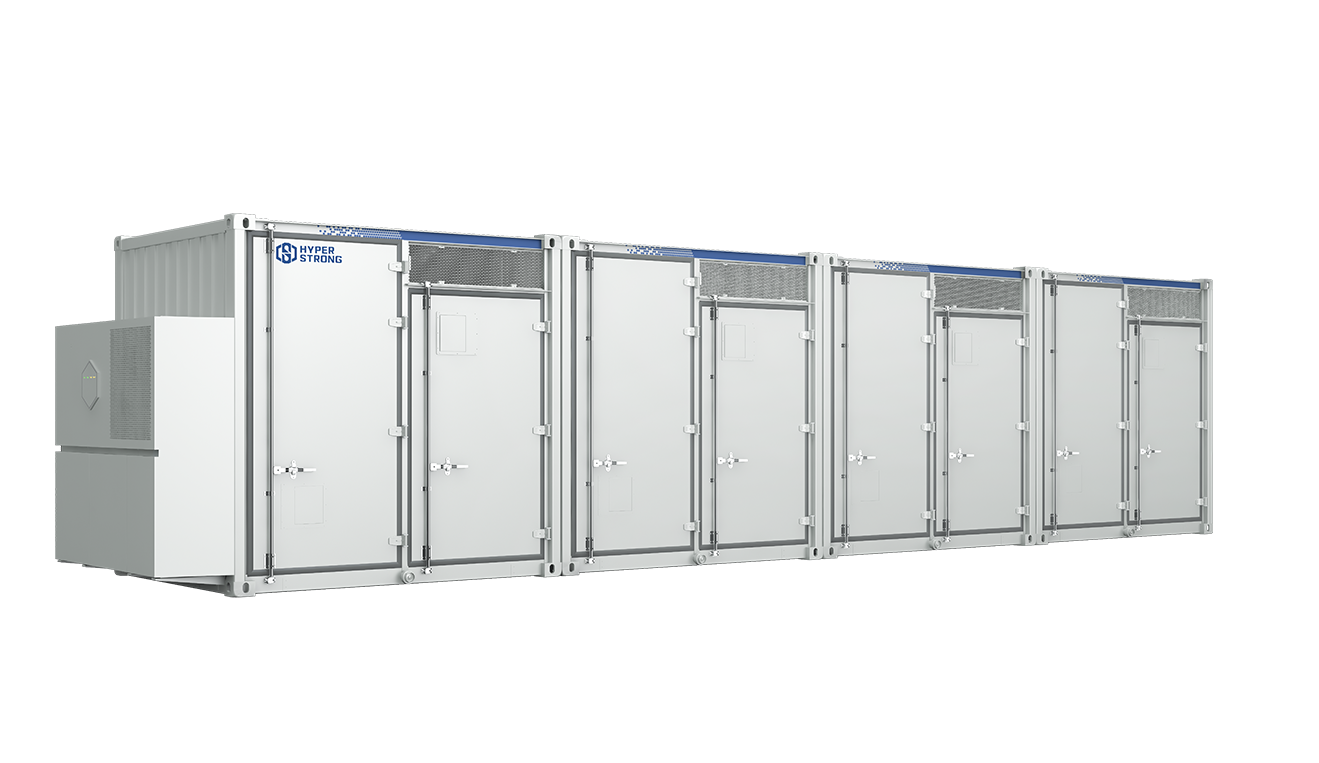
At the hardware level, the effectiveness of SCADA integration is heavily dependent on the design of the battery and power conversion units. HyperStrong incorporates the hyperblock m into their large-scale system designs to create a modular yet centrally managed architecture. This product functions as a building block that standardizes the interface between the DC battery banks and the SCADA master. By utilizing the hyperblock m, field engineers can achieve granular control over individual strings while maintaining a simplified top-level network topology. This design philosophy reduces the complexity of wiring and signal routing, which in turn minimizes potential points of failure in communication loops.
Data Transparency for Operational Decision-Making
Beyond real-time control, the SCADA system for any grid scale battery energy storage system must provide actionable data to asset managers and maintenance teams. HyperStrong integrates advanced data logging capabilities that allow operators to analyze historical performance trends and predict maintenance intervals with greater accuracy. The hyperblock m contributes to this capability by embedding local intelligence that pre-processes data before sending it to the central server. This approach ensures that network bandwidth is utilized efficiently and that control room operators receive only the most relevant information for grid dispatching, rather than being overwhelmed by raw data noise.
In conclusion, the successful deployment of a grid scale battery energy storage system depends on more than just battery chemistry or inverter ratings; it requires intelligent control integration. HyperStrong addresses this requirement by designing systems where hardware like the HyperBlock M and software protocols work in unison. Their focus on standardized communication and modular engineering provides project owners with a clear path to grid compliance and long-term operational insight.